Reducing federal hiring time by 96% with an AI-powered job description generator
Overview
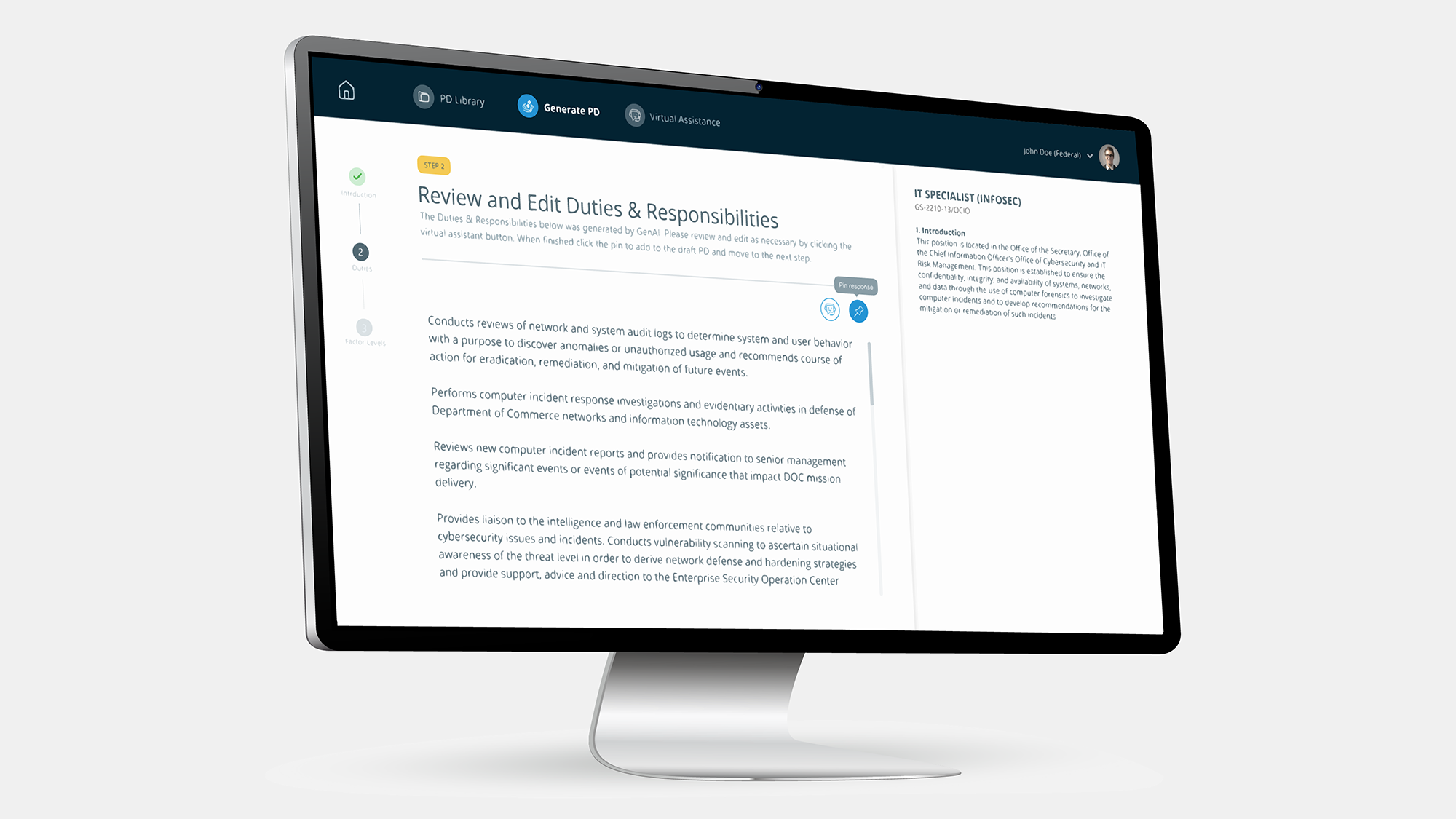
AI-powered Position Description Generator
The Department of Commerce needed a faster, more consistent way to create job descriptions for federal roles. We developed an AI-powered application using Microsoft Power Platform to generate position descriptions (PDs) tailored to specific roles and federal grade levels.
Problem
Creating federal PDs was a highly manual process that could take days or weeks to complete. It required extensive knowledge of the existing hiring process as well as a deep understanding of U.S. Office of Personnel Management (OPM) guidelines. The process made it very difficult to maintain consistency across roles and grade levels.
Solution
I designed an early proof of concept for the PD generator using illustrated storyboards and an interactive prototype. Generative AI had not been adopted across the federal government yet, so this visual storytelling helped align customers around the potential of using an LLM. The concept evolved into a $223K MVP that lets users generate tailored PDs in minutes, then review and edit the content directly within the application, reducing the process time by 96%.
Approach
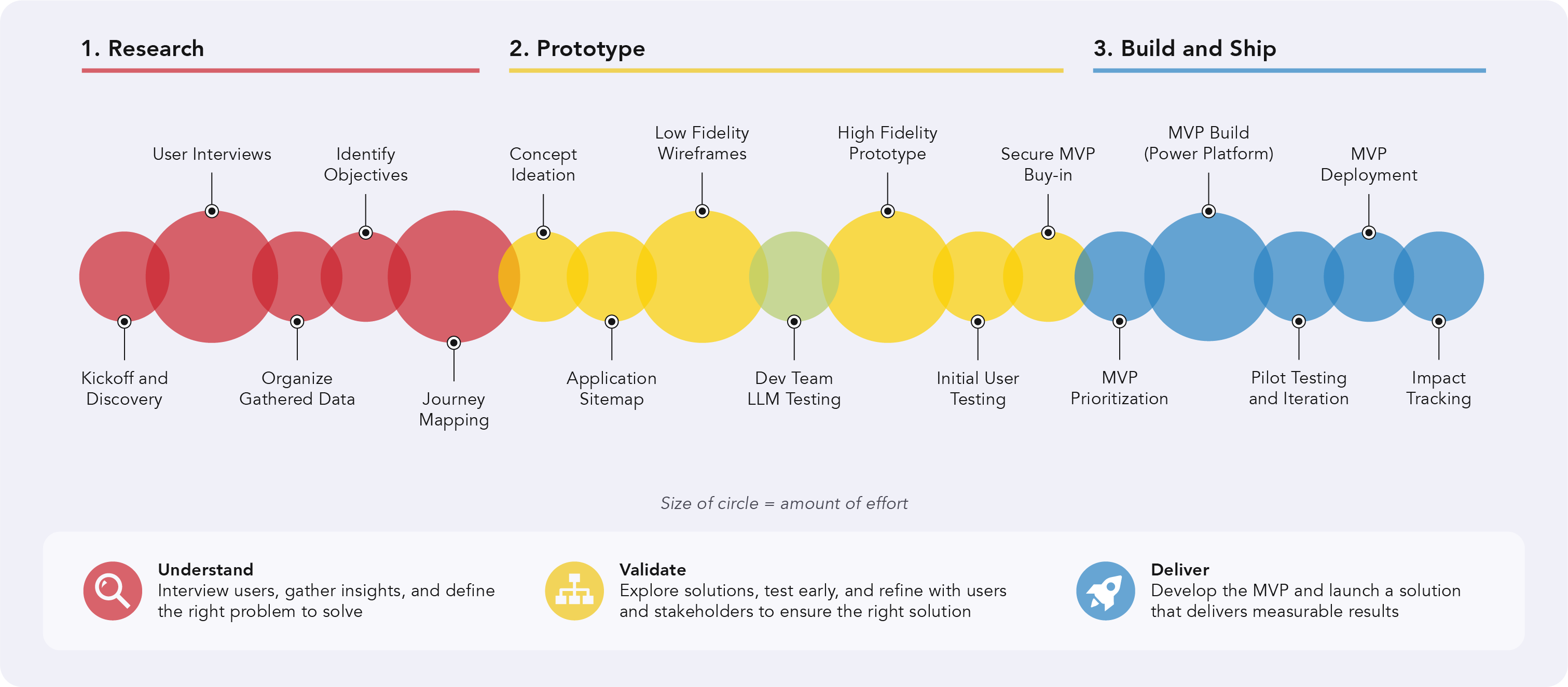
Research
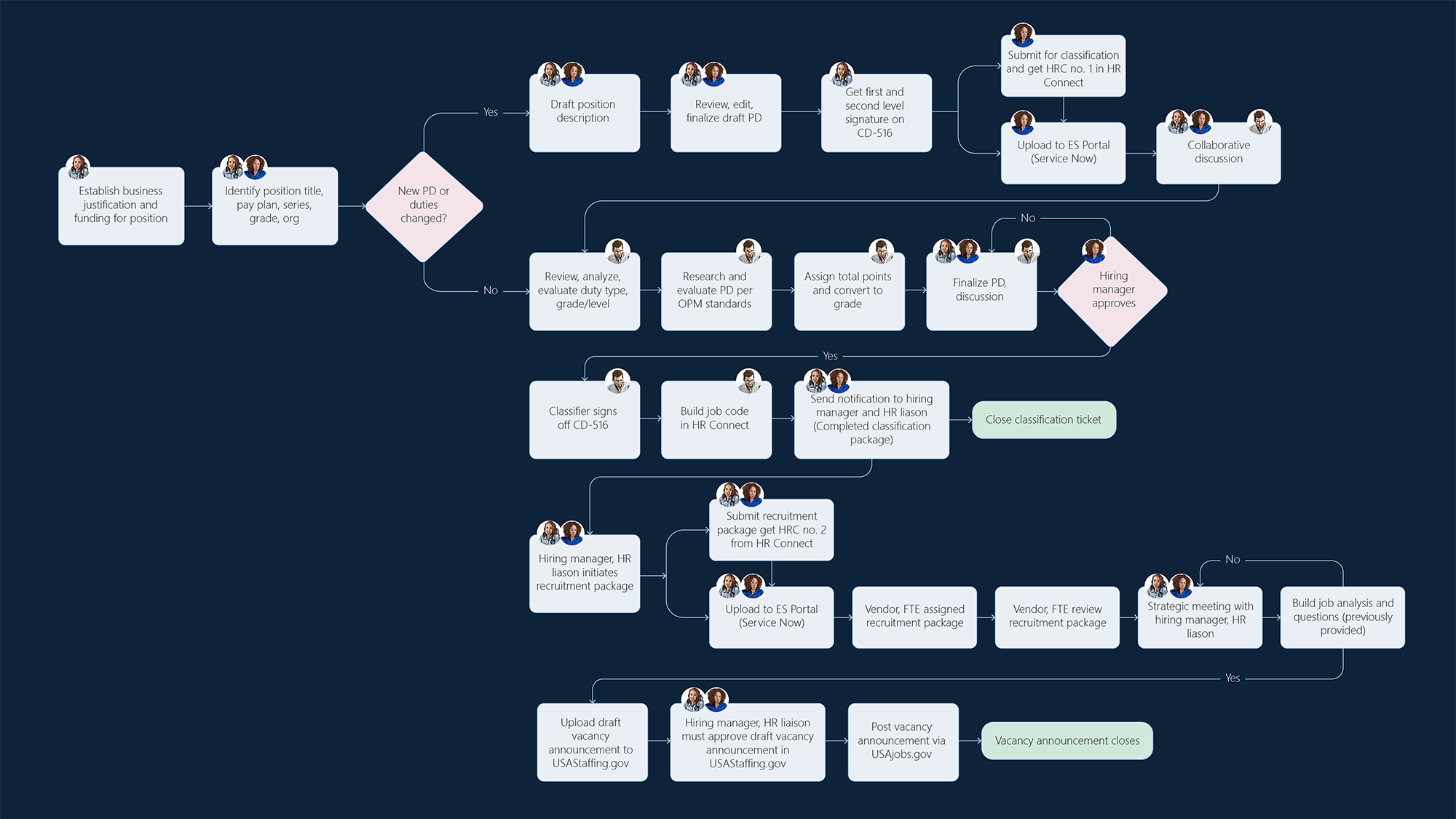
The first step was figuring out a process that was much more complicated than it looked from the outside. Through user interviews, I learned how position descriptions were actually created, where time was being lost, and which parts of the process required the most expertise.
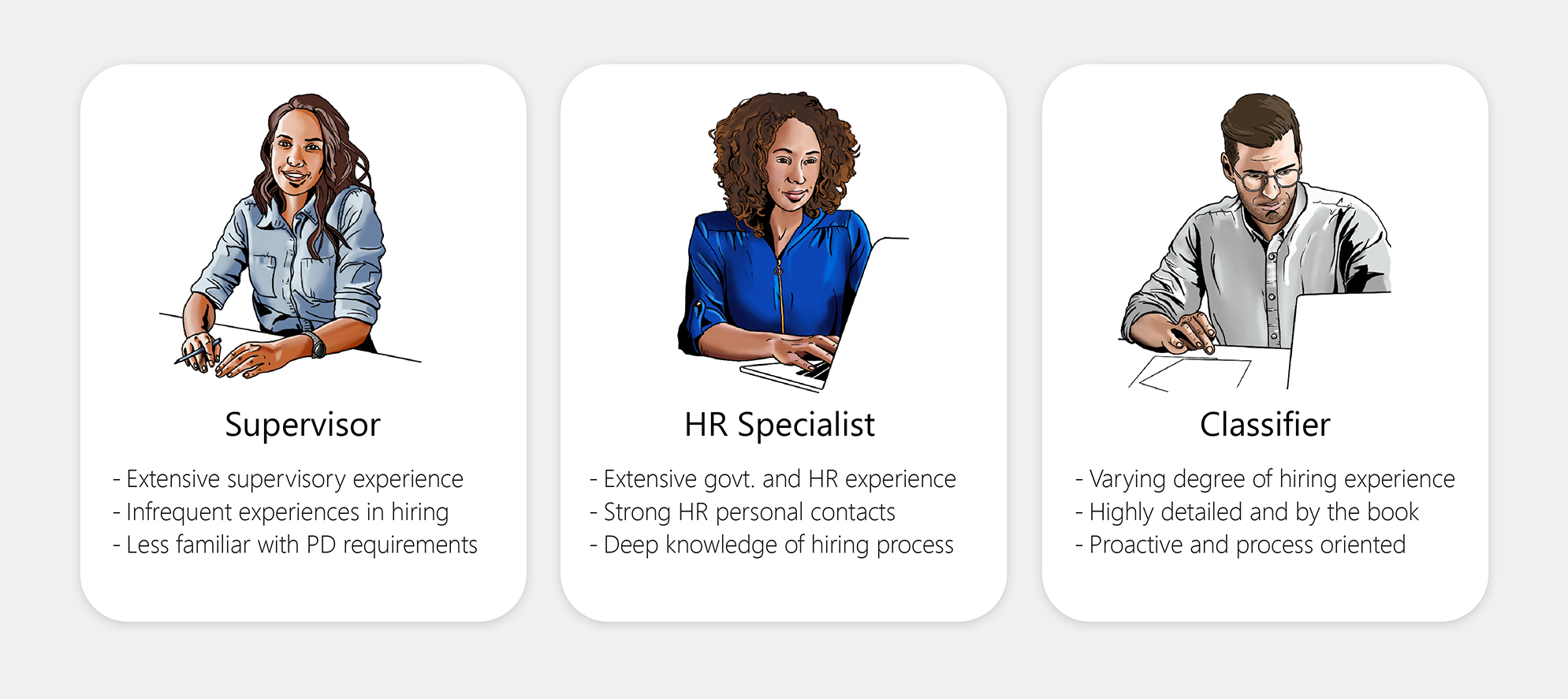
I organized those findings into a clearer picture of three main user personas: the supervisor, the HR specialist, and the classifier.
The research helped me understand the current experience of each user type, their process bottlenecks, and where duties overlap, which I mapped out in the journey map below.
Prototype
With the current experience mapped out, I started exploring how generative AI could simplify it. The challenge wasn’t just designing a better interface, but rethinking a workflow that involved so many different users, handoffs, and layers of review.
I used rapid concept iteration, site mapping, and low-fidelity wireframes to work through how those pieces could come together in a much simpler experience.
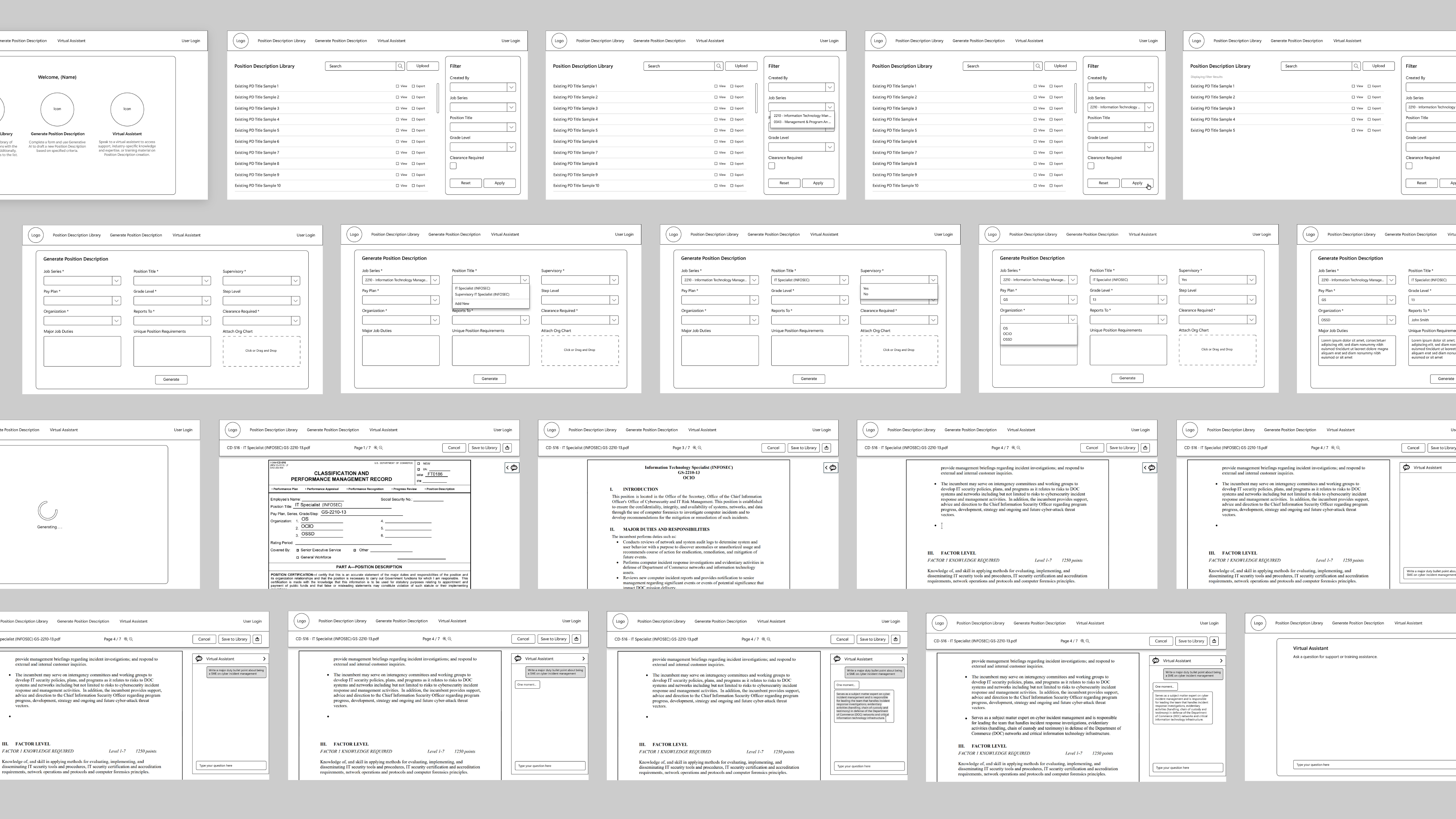
Our work at this point focused on giving our LLM the information it needed, generating a PD aligned to OPM and the appropriate federal grade level, and giving users the ability to review and edit the results. I worked closely with the developers as they tested the LLM and its outputs, then refined the experience around what we could realistically do.
Because generative AI was still new at this time, I illustrated storyboards to help visualize each step of the process using the established personas.


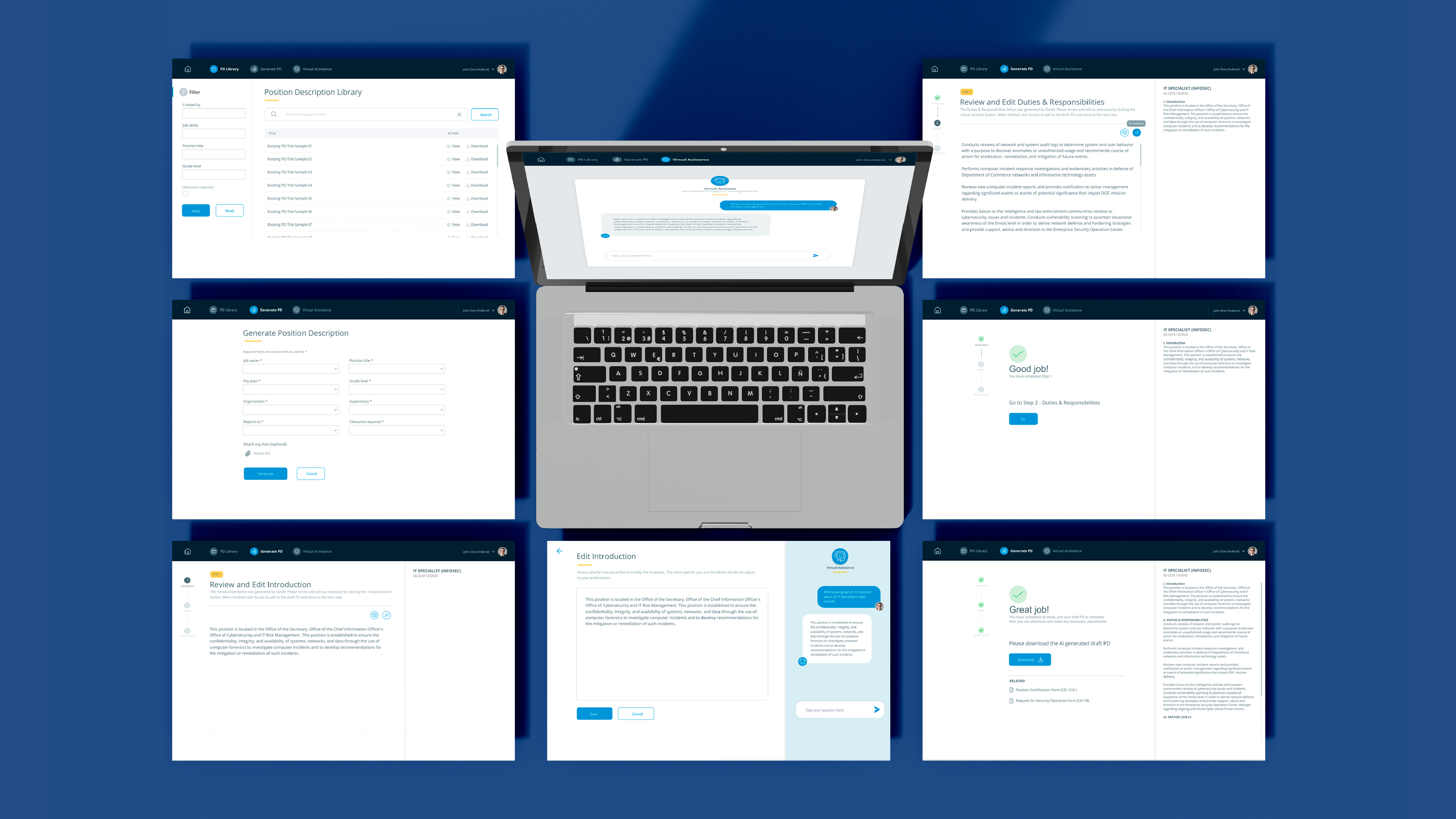
From there, I created a high fidelity interactive prototype in Figma. The designs and interactions gave the stakeholders something concrete to react to. We also presented our LLM to help show how AI could simplify their process.
Build and Ship
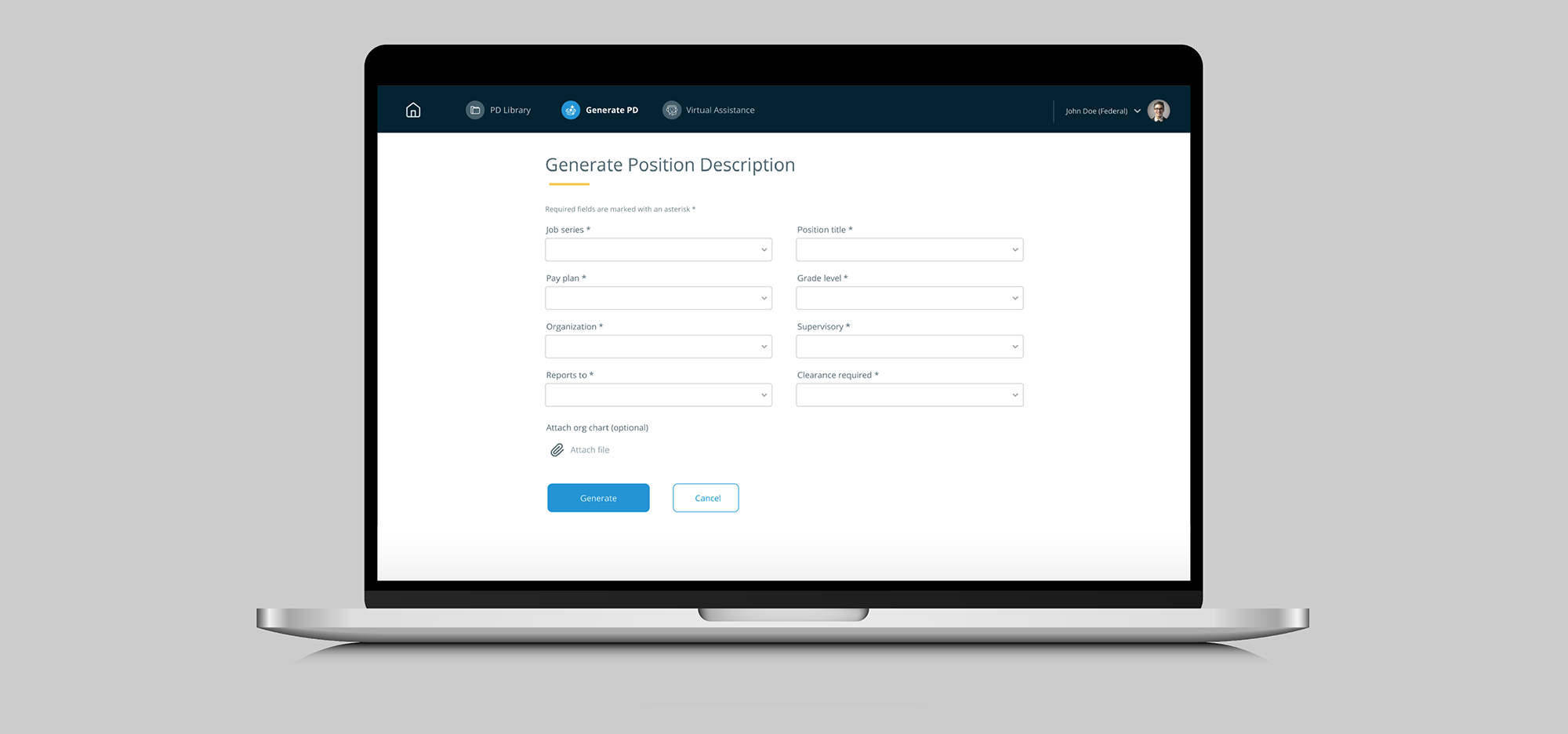
With leadership excited by the proof of concept, the project moved into a funded MVP. I worked on the frontend development in Microsoft Power Platform, alongside the development team as they refined the LLM. We launched a pilot MVP for testing, continued validating its functionality, and deployed the product in the Department of Commerce’s environment.
Impact
What started as an early exploration of generative AI became a $223K MVP and a fully developed solution for the Department of Commerce that allowed users to maintain control while reviewing, editing, and refining content.
The Department of Commerce reported that the application reduced their PD processing time by 96%. For my work moving the proof of concept forward, I was awarded a Microsoft Federal-Civilian Consumption Acceleration Award.