Accelerating biomedical research through a $2.65M AI-powered digital lab
Overview
AI-powered Digital Lab: PLURRI
ARPA-H initiated the PLURRI project to transform the way drug therapies are developed. PLURRI is an AI-powered platform designed to build a causal understanding of intercellular and intracellular interactions.
Problem
Drug development is a costly, time-intensive process with a high rate of failure. Over 85% of drug therapies fail during or after clinical trials. Researchers needed a better way to understand complex biological interactions earlier in the development process and make more informed decisions before reaching clinical stages.
Solution
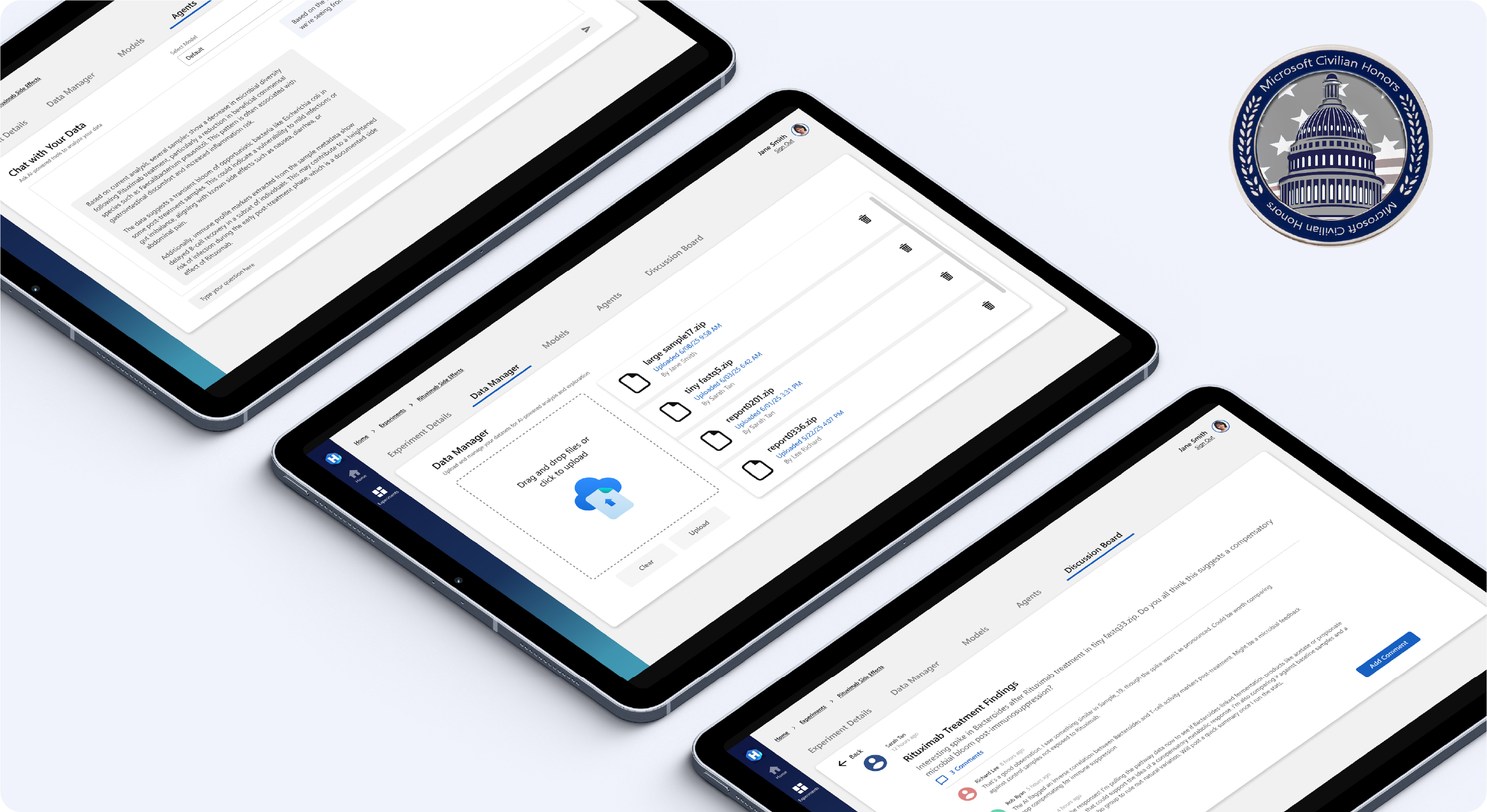
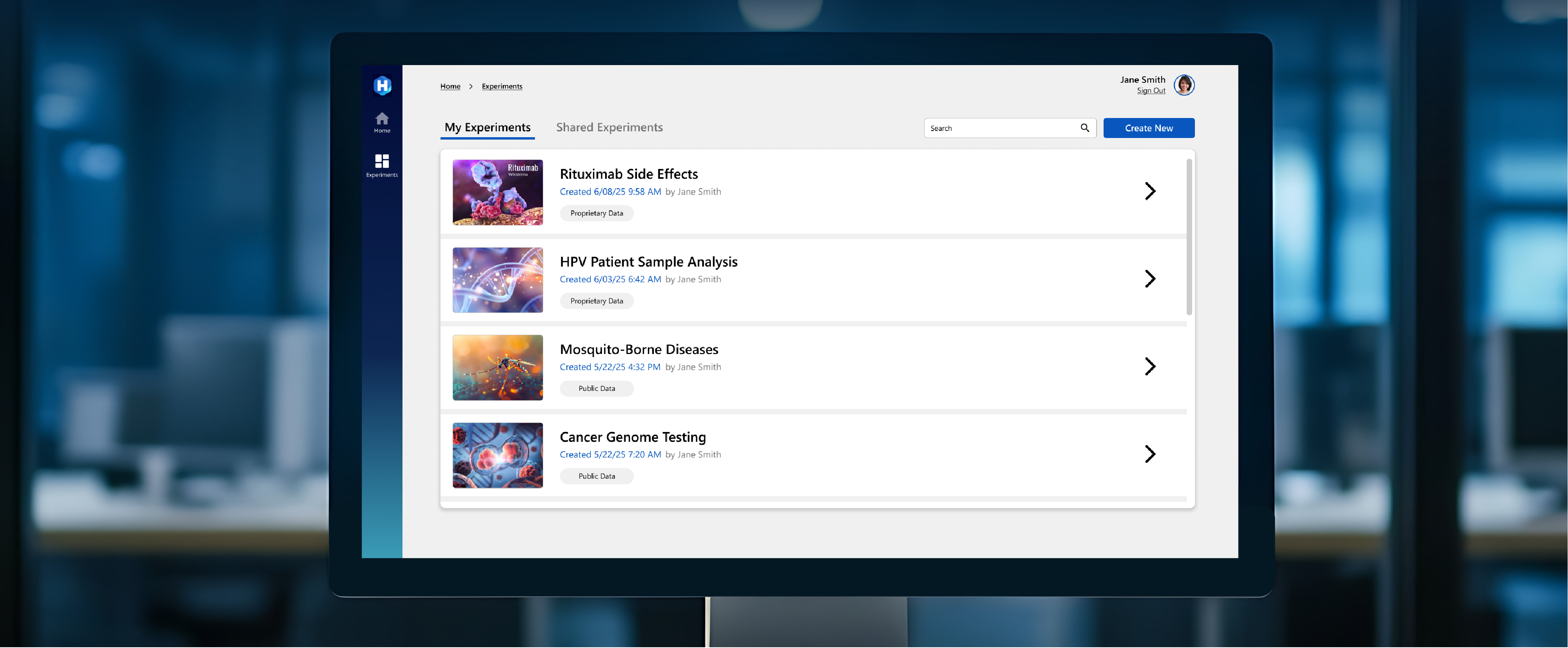
I led the design of a low-code digital lab environment on Microsoft’s Power Platform. PLURRI lets researchers manage data, configure experiments, and explore AI-driven insights — all within a modular interface designed to change and adapt across different research areas.
Approach
Research
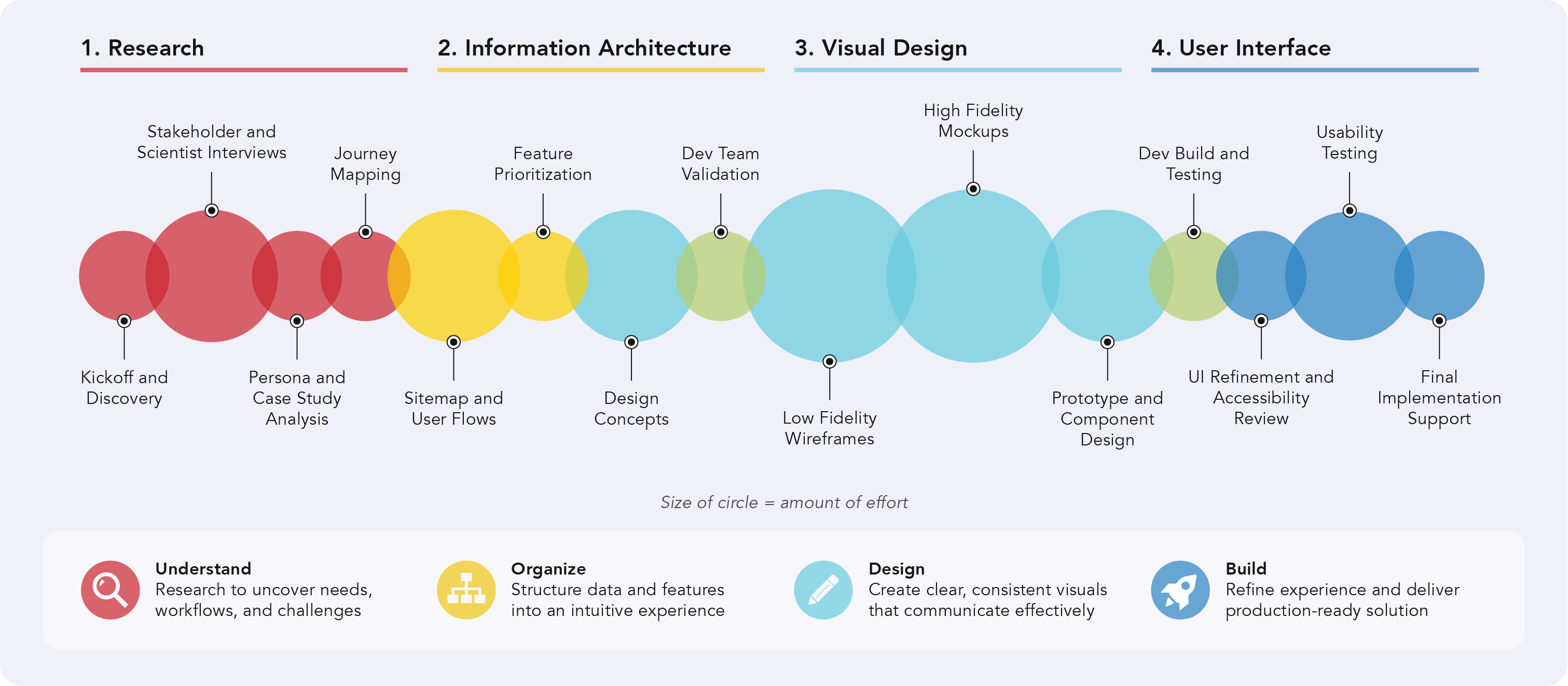
Before designing PLURRI, I needed to understand how scientists move from raw biological data to experimentation. I worked with them to learn, map their workflows, and uncover pain points. I’m (obviously) no scientist, so this took a lot of background research, studying, and meeting with experts.
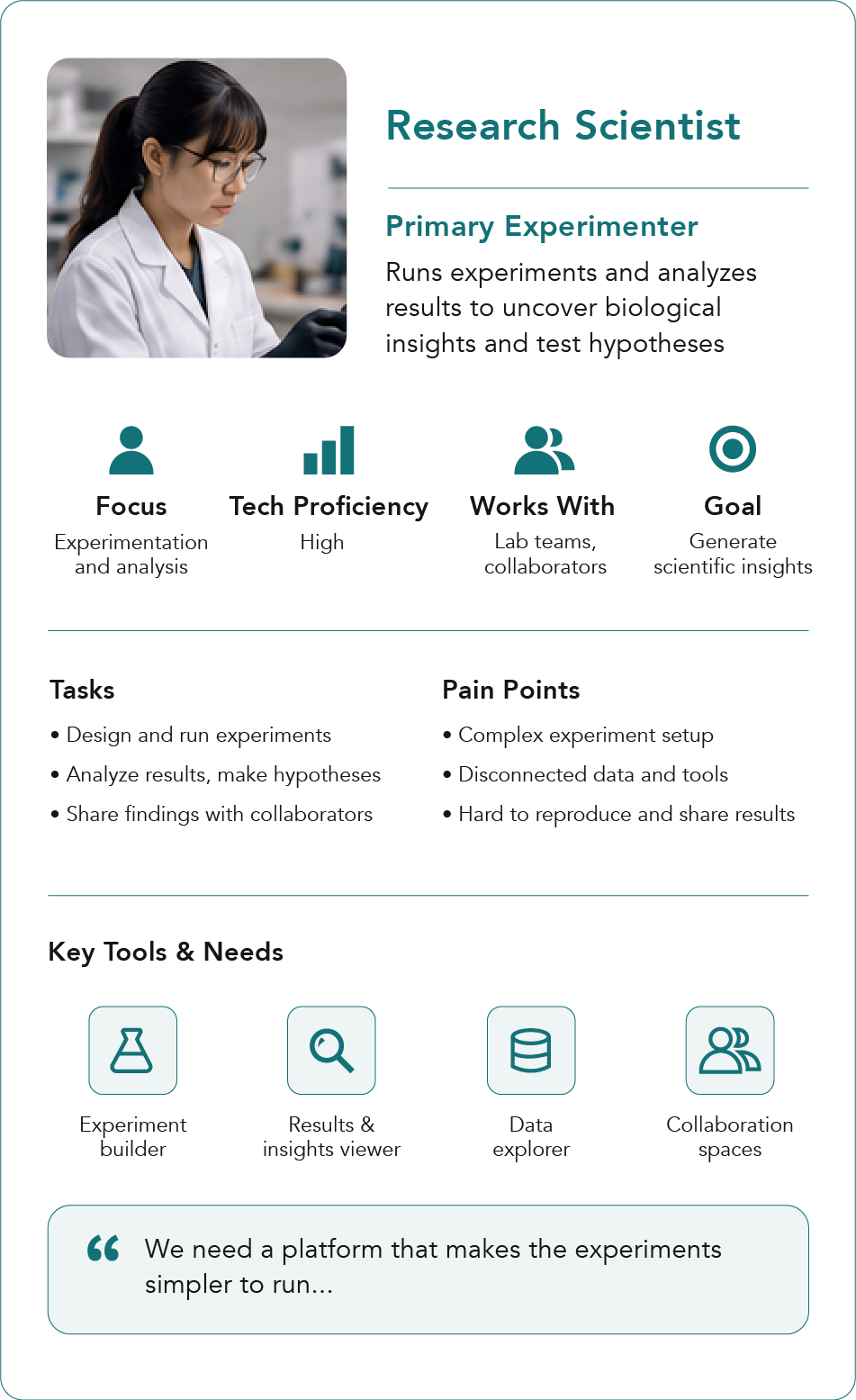
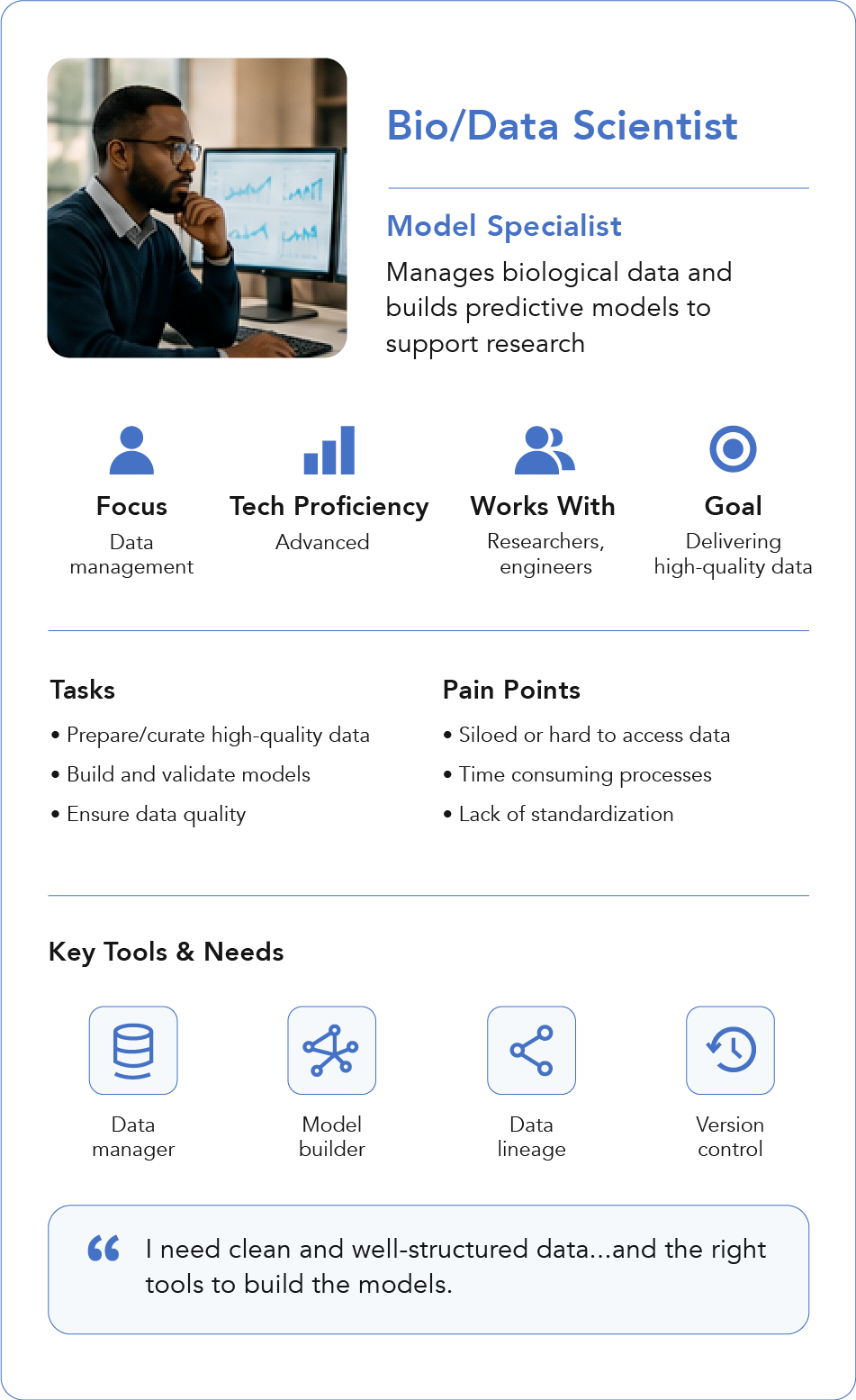
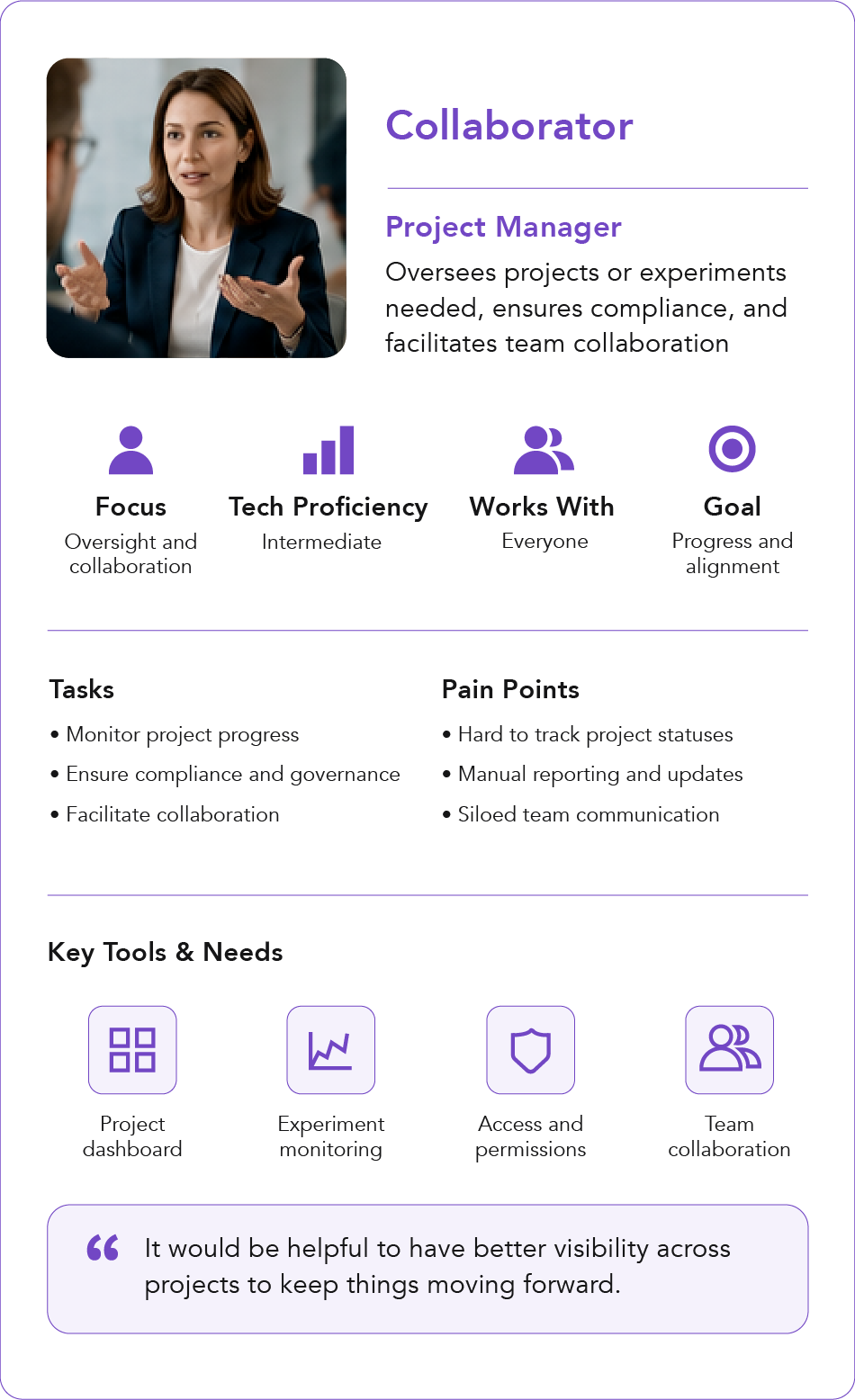
After developing personas around three key user types, I was able to begin journey mapping. These processes helped identify a lot of the interactions we would need in the application, plus what workflows could be simplified.
Information Architecture
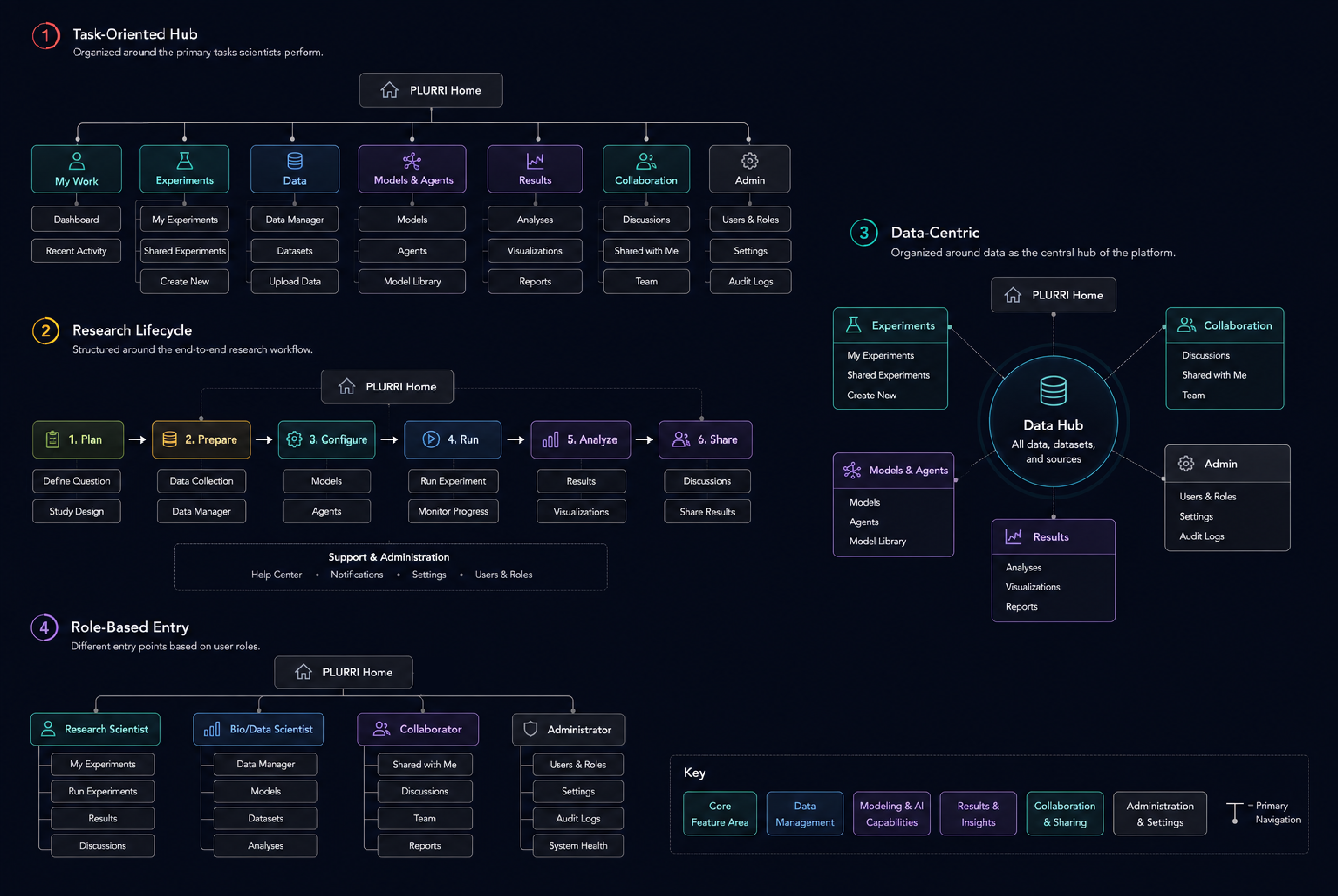
With the research phase finished, I started site mapping, coming up with design concepts, and partnering with the dev team to prioritize features and requirements.
Visual Design
All of the information gathered so far helps inform what users need. Research platforms can be very overwhelming, so my goal was to keep the visual design clean, simple, and easy to understand. I started with basic wireframes then moved on to high-fidelity mockups, walking the client through design decisions at each sprint review along the way.
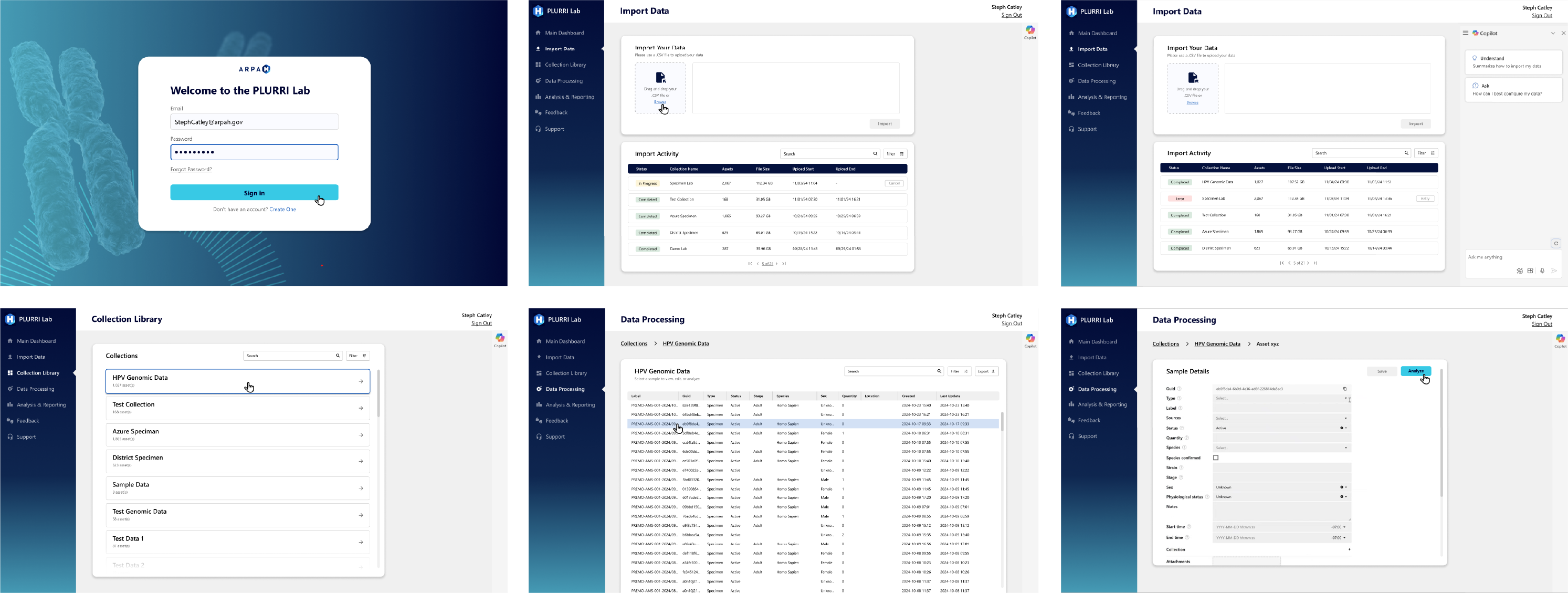
Throughout the design phase, requirements and ideas can change. Being able to iterate and adapt is extremely important. For PLURRI, I produced an alternate set of mockups, which I eventually turned into a prototype to show interacation details.
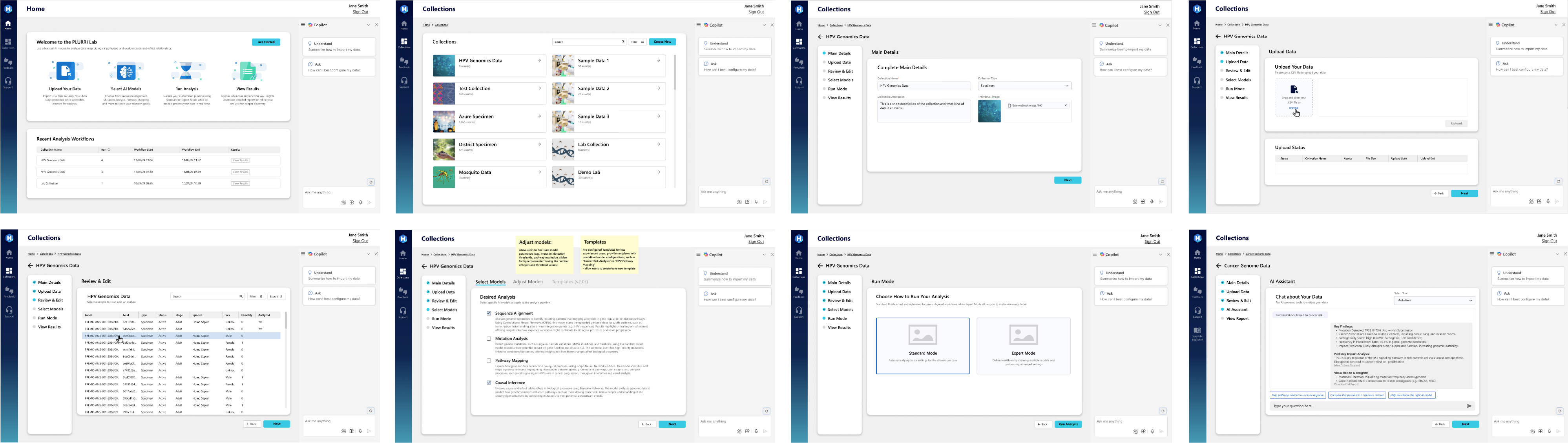
User Interface
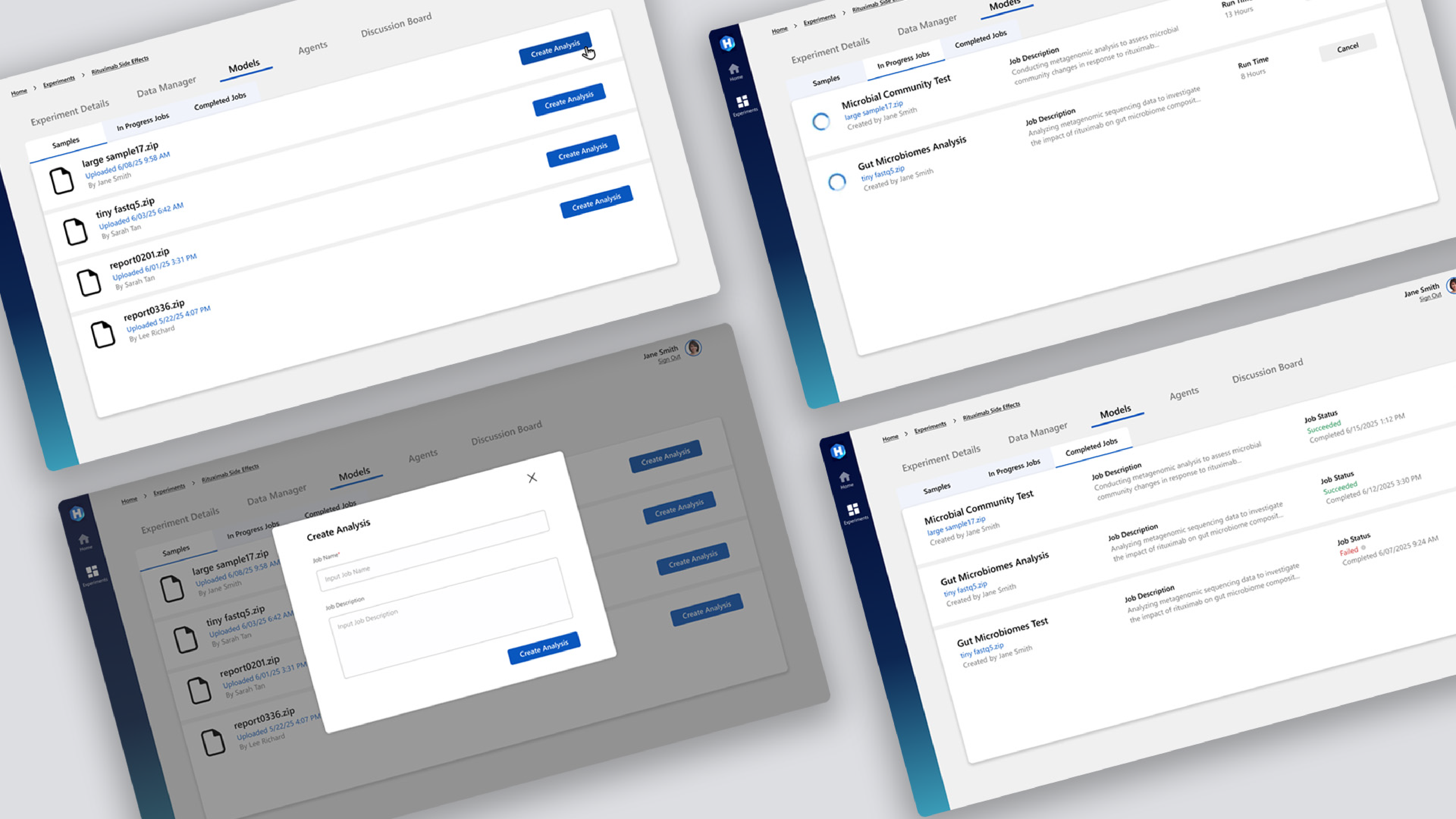
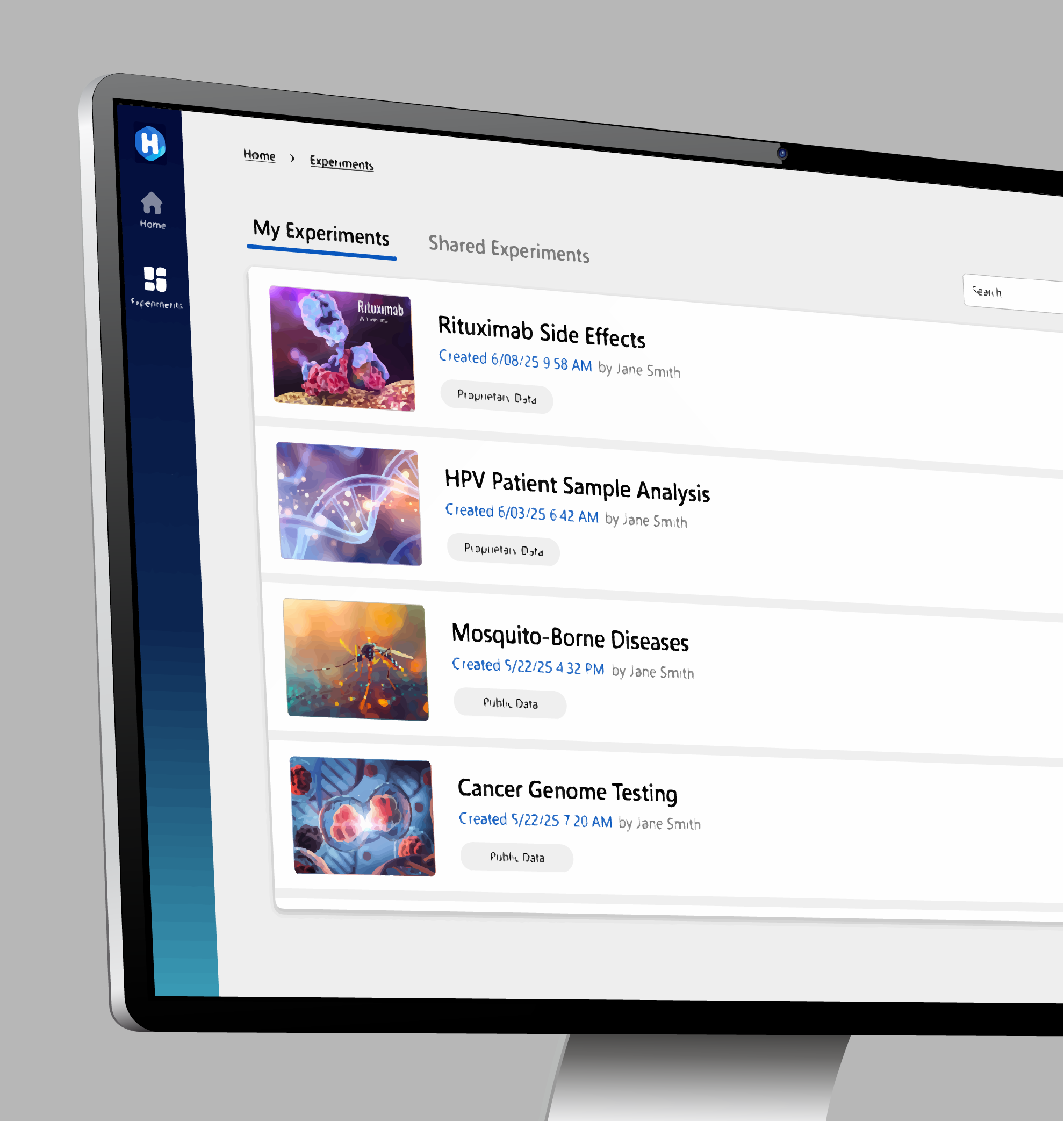
The last design phase involves refining, testing, an accessibility review, and final implementation while working closely with the development team. This is where we get to deliver the solution, along with a scalable design system for the customer.
Impact
PLURRI’s scalable AI-platform accelerated experimentation and biomedical research, which has led to opportunities to increase the success rate of drug therapy. My team and I earned a Microsoft Civilian Honors Award for our work bringing the platform from concept to delivery.